Adhira Homes

Where Is the Best Place to Live in North Goa?
1/20/20263 min read
So, you’ve decided Goa is the place for you—congratulations! 🎉
The next (and far more important) question is: where exactly in Goa should you live?
North Goa isn’t one homogenous destination. Where you choose to settle depends entirely on the lifestyle you’re looking for. Broadly, North Goan villages fall into three distinct categories.


1. Villages with Beach Proximity
Examples: Reis Magos, Nerul, Candolim, Anjuna, Assagaon, Siolim, Vagator.
These villages form the popular belt stretching from Reis Magos/Nerul all the way to Vagator.
What to expect:
A high density of cafés, restaurants, clubs, boutiques, and nightlife.
Heavy tourist footfall throughout the year.
Restaurant prices are high; service quality and authenticity can be inconsistent.
Most cuisines are “imported” from Indian metros rather than rooted in local Goan culture.
If you love crowds, fast conversations, and socialising, you'll love these villages.
Living reality:
Property prices rival (and often exceed) those of major Indian cities.
Daily rentals and short-term stays dominate, so the neighborhood rarely feels settled or residential.
Noise, traffic, and seasonal chaos are part of daily life.
Best suited for:
Highly social individuals.
Bachelors or young couples.
People who enjoy eating out, partying, and constant interaction.
Note on beaches:
While these villages are close to beaches, once you actually live in Goa, you’ll realize beach visits become rare. Most North Goan beaches are fairly average—unless you’ve never travelled outside India, in which case they may still feel appealing over beaches in Indian cities like Mumbai
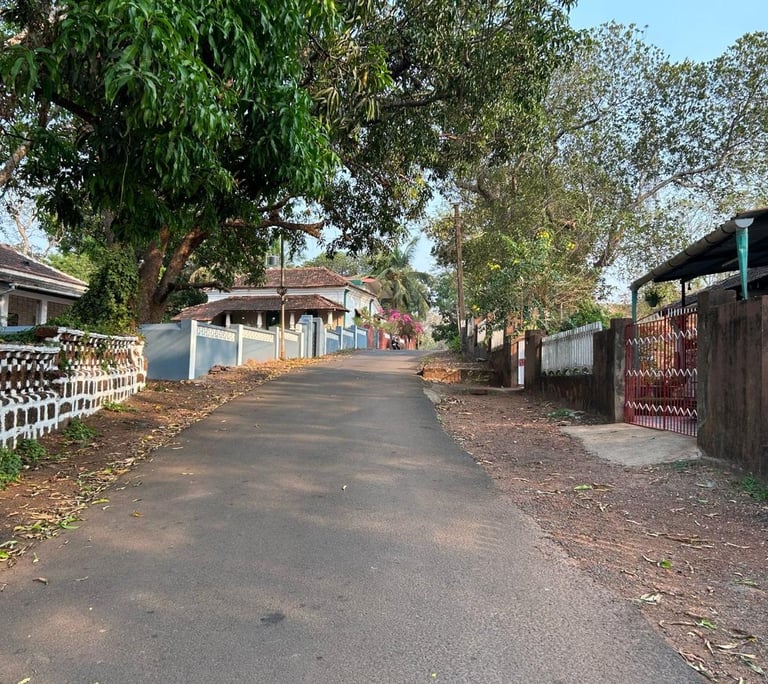
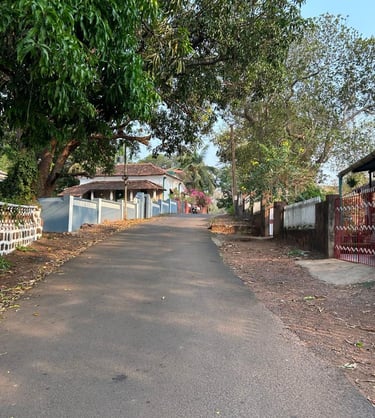
2. Scenic Interior Villages (The Real Goa)
Examples: Tivim, Sircaim, Moira, Aldona, Succor, Salvador do Mundo.
These villages sit slightly inland, away from the tourist belt.
What to expect:
30–45 minutes from the beach.
Limited cafés and restaurants locally.
Regular drives to Siolim, Assagaon, Vagator, or Candolim for social outings.
No real daily rental market, no tourists here.
Best suited for:
People seeking peace and quiet.
Families and long-term residents.
Anyone who doesn’t mind driving 15–30 minutes for their favorite restaurant.
Live here for five years, and time truly slows down. This is where real susegad begins—and where you may actually start feeling Goan.
Why people love them:
Beautiful inner roads, rivers, lakes, hills, and more greenery.
Far more peaceful and scenic than beachside villages.
Strong sense of community and slow living.
Property outlook:
Prices are rising steadily.
Some villages (like Moira) already command beach-level rates.
As Goa becomes more of an end-user residential market, demand here will only increase.


3. Villages with City-Like Infrastructure
Examples: Mapusa, Porvorim, Panjim.
These are essentially village-cities—smaller versions of Indian metros.
What to expect:
Dense markets, Udupis, local restaurants, cafés, and retail stores.
Old, crowded buildings similar to parts of Mumbai.
Full city infrastructure: schools, hospitals, banks, offices.
Living reality:
Convenient and practical.
Less scenic and less “Goa-like”.
Higher congestion but greater accessibility.
Best suited for:
Those hesitant to move to a quiet village immediately.
Families prioritizing schools and healthcare.
Anyone wanting a transition phase before embracing rural North Goa.
What About Morjim, Ashwem & Mandrem?
We’ve intentionally left out newer zones like Morjim, Ashwem, and Mandrem. These areas are similar to the older beach-proximity villages—just less saturated for now. Over time, they are likely to follow the same trajectory as Calangute or Vagator.
Final Thoughts..
There is no single “best” place to live in North Goa—only what’s best for you.
Want social energy and convenience? → Beachside villages.
Want peace, nature, and long-term living? → Interior villages.
Want comfort and familiarity? → City-like hubs.
If you have thoughts, disagreements, or personal experiences, do share them in the comments—we’d love to hear your perspective.